
Wenus of Willendorf
Discovered in Austria in 1908, the Venus of Willendorf is a 25,000-year-old Paleolithic figurine that continues to fascinate archaeologists and art lovers alike. Was she a fertility symbol, a goddess, or something else entirely? With exaggerated curves and no visible face, this tiny limestone figure might reveal how early humans viewed beauty, survival, and the divine.
FIELD NOTES
7/3/20251 min read
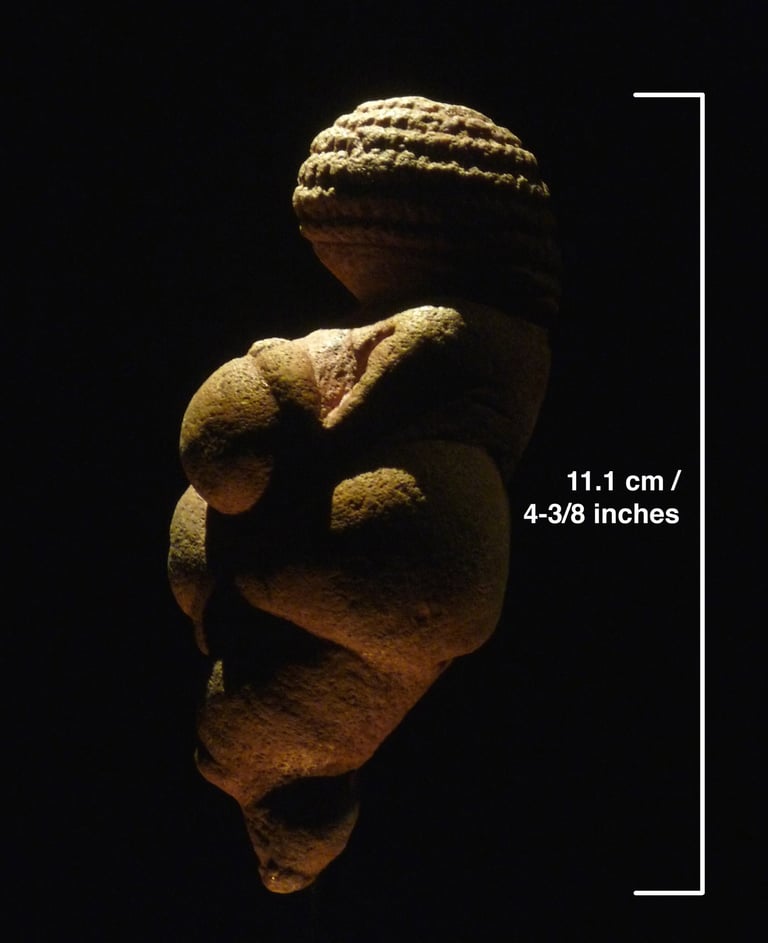
The Venus of Willendorf is a small, nearly 11 cm figurine carved from oolitic limestone, depicting a nude female figure with strongly exaggerated features. Belonging to the group of so-called “steatopygous” representations, it emphasizes large breasts, a protruding belly, wide hips, and prominent thighs—traits often associated with fertility and fat storage adaptations. In contrast, other body parts such as the face and feet are absent or minimized, while the arms rest delicately on the breasts.
The head is richly decorated with a patterned arrangement of horizontal and cross-cut lines, interpreted as a hairstyle or headdress. Originally, the figurine was covered in red pigment, likely ochre, remnants of which have been found in its surface cavities. Red ochre held symbolic importance in prehistoric contexts, especially in burial practices.
Discovered in 1908 near Willendorf in Austria, the figurine comes from a region with multiple Paleolithic sites dating between roughly 43,500 and 29,000 years ago. Unlike most similar Venus figurines made from bone or ivory, this one is carved from stone. Modern micro-CT analysis revealed fossil shell fragments within the oolite and helped identify its geological origin.
Research suggests the raw material did not originate locally. Instead, it likely came from areas as far as northern Italy (Lake Garda region) or even eastern Ukraine, indicating long-distance movement or exchange networks among Gravettian populations about 30,000 years ago. The porous, uneven structure of the stone also explains both the indentations on the figurine and why it was chosen—it was relatively easy to carve.
Overall, the Venus of Willendorf provides valuable insights into prehistoric art, mobility, and symbolic expression in Upper Paleolithic Europe.
Wenus of Willendorf
28000 - 25000 Years Old
