
The Venus of Brassempouy: The Face That Looked Back
Carved from mammoth ivory around 25,000 years ago, the Venus of Brassempouy is one of the earliest known representations of a human face and a masterpiece of Ice Age art.
FIELD NOTES
Aro
7/27/20262 min read
The Venus of Brassempouy: The Face That Looked Back
Most Ice Age figurines emphasize the human body. The Venus of Brassempouy is different.
Carved from mammoth ivory around 23,000–25,000 years ago, this tiny sculpture is one of the earliest known representations of a human face. Despite measuring only 3.6 centimeters (1.4 inches) tall, it has become one of the most iconic works of Paleolithic art. Unlike many prehistoric figurines, its greatest mystery isn't what it represents—it's how remarkably human it feels.
A Discovery in Southwestern France
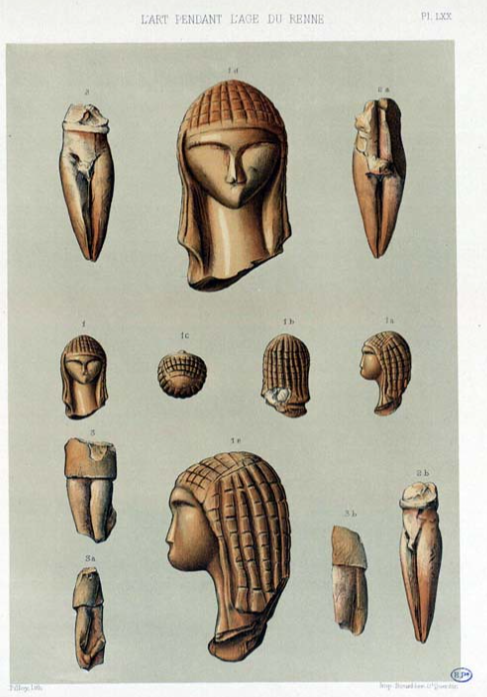
The figurine was discovered in 1894 during excavations at Grotte du Pape, near the village of Brassempouy in southwestern France. The site belongs to the Gravettian culture, a period famous for sophisticated ivory carving and some of the finest portable art of the Upper Paleolithic. The famous head was found alongside several other fragmented ivory figurines, suggesting the cave may once have contained an entire collection of carved human representations.
A Face Unlike Any Other
Although the sculpture is missing its body, the surviving head reveals an extraordinary level of craftsmanship. The artist carefully carved a rounded forehead, a long nose, and a delicately shaped chin. Unlike later sculptures, the mouth is absent and the eyes are represented only by subtle contours, yet the face remains instantly recognizable as human. This naturalistic treatment makes the Venus of Brassempouy unique among Ice Age figurines. It is less symbolic and more personal.
Hair, Hood, or Something Else?
Perhaps the most debated feature is the distinctive pattern covering the top of the head. A series of carefully engraved intersecting lines forms a grid-like design that has fascinated archaeologists for more than a century. Some researchers interpret it as braided hair, making it one of the oldest depictions of a hairstyle ever discovered. Others suggest it represents a woven cap, a net, or a ceremonial headdress. No interpretation has been universally accepted. Whatever its true meaning, the pattern demonstrates that Ice Age artists paid close attention to details beyond the human face itself.
More Than a Venus Figurine
Although often grouped with the famous "Venus figurines," the Brassempouy sculpture differs in one important way. Most Venus figurines emphasize fertility through exaggerated body proportions. The Lady of Brassempouy shifts the viewer's attention toward individual identity. Rather than focusing on the body, the artist devoted remarkable care to the face, creating an image that still feels surprisingly lifelike after more than twenty millennia.
Why It Matters
The Venus of Brassempouy reminds us that Ice Age artists were capable of far more than simple symbolic carvings. Whether the sculpture represents a real individual, an idealized woman, or a spiritual figure, it demonstrates an extraordinary understanding of human form and artistic expression.
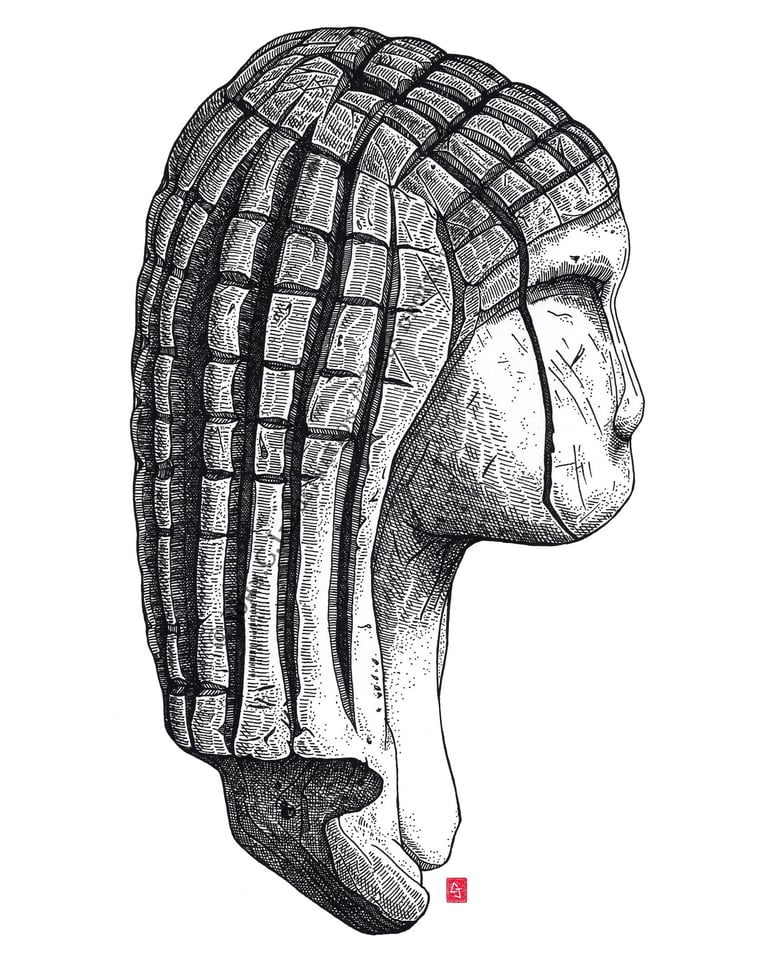
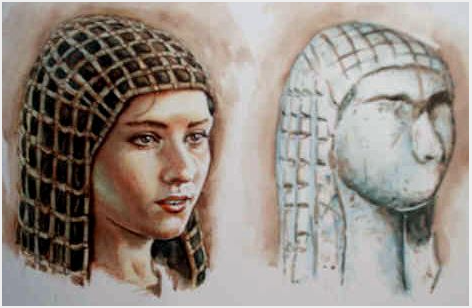
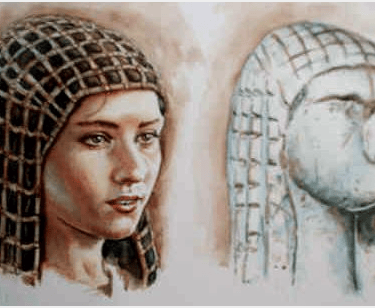
Venus of Brassempouy
26000 - 24000 Years Ago
