
The Neanderthal Flute: Did Music Begin 60,000 Years Ago?
A cave bear bone discovered in Slovenia may be the world's oldest musical instrument. Explore the evidence, controversy, and what the Divje Babe flute reveals about Neanderthal intelligence and creativity.
FIELD NOTES
Aro
6/22/20262 min read
In 1995, archaeologists working inside a cave in Slovenia uncovered a small fragment of bone that would ignite one of the most heated debates in prehistoric archaeology.
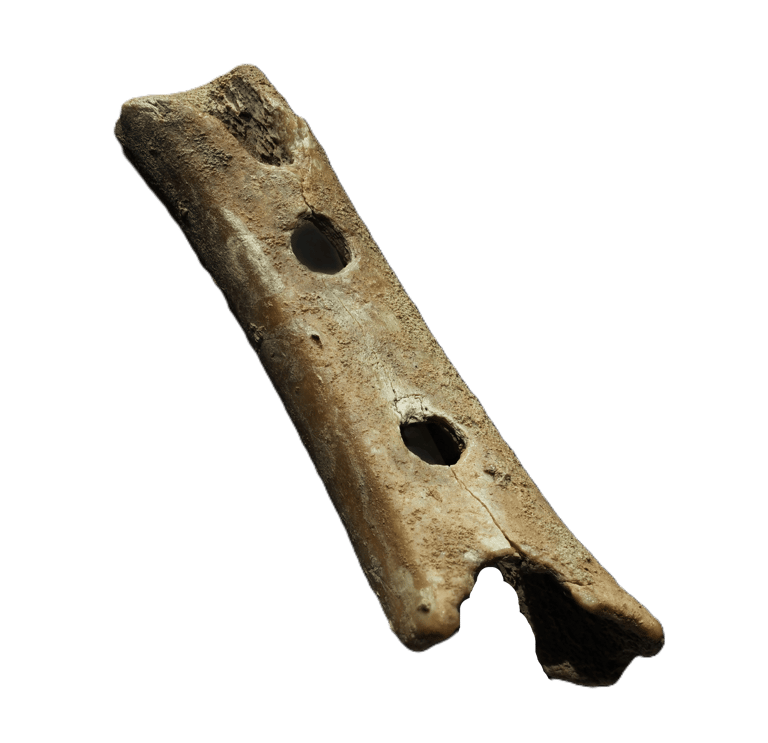
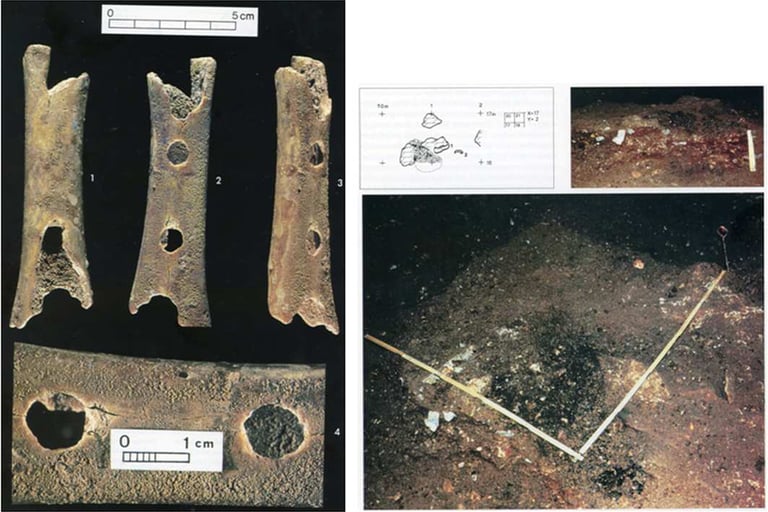
The object is only 11.4 centimeters long. It was made from the femur of a young cave bear and contains a series of carefully aligned holes. To some researchers, it is the oldest known musical instrument on Earth. To others, it is simply a bone damaged by the teeth of a carnivore.
If the first interpretation is correct, then Neanderthals were making music tens of thousands of years before the famous Ice Age flutes of Germany.
The artifact was discovered during excavations at Divje Babe I Cave in northwestern Slovenia. Archaeologists found it embedded within a Middle Paleolithic layer associated with Neanderthal occupation. The bone lay close to the remains of an ancient hearth and among stone tools characteristic of the Mousterian culture.
Dating evidence places the layer between roughly 50,000 and 60,000 years ago.That age alone makes the artifact extraordinary.
The oldest undisputed musical instruments—bird-bone and mammoth-ivory flutes from Germany's Swabian Jura—are around 40,000 years old. If the Divje Babe specimen truly is a flute, it pushes the history of music back by at least another ten thousand years.
The object is a fragment of a juvenile cave bear femur containing two complete holes and traces of additional openings. The holes are arranged in a line and appear unusually regular.
Researchers supporting the flute interpretation argue that the spacing of the holes is unlikely to be accidental. They suggest the bone was deliberately modified using stone tools and designed as a wind instrument.Experimental reconstructions have even demonstrated that a replica can produce a wide range of musical notes. Some studies reported a playing range of approximately three and a half octaves, comparable to many later musical instruments.
The implications would be profound.
For much of the twentieth century, Neanderthals were portrayed as cognitively inferior to modern humans—capable hunters, but lacking symbolism, art, and complex culture.That image has steadily collapsed.
Today we know that Neanderthals buried some of their dead, used pigments, collected unusual objects, produced ornaments, and may have created symbolic markings. The Divje Babe flute fits into this broader picture of increasingly sophisticated Neanderthal behavior.
Music requires more than technical skill. It implies planning, social interaction, memory, rhythm, and perhaps even emotional expression.If Neanderthals were making music 60,000 years ago, then the roots of human creativity run deeper than we once imagined.
Perhaps the most fascinating aspect of the Divje Babe flute is that it leaves us with a mystery that may never be fully solved.
No one knows what melodies might have echoed through the cave valleys of Ice Age Slovenia. No one knows whether Neanderthals gathered around fires to share music, rituals, stories, or celebrations.
Yet that fragment continues to challenge one of archaeology's oldest assumptions—that creativity, symbolism, and music belonged exclusively to our own species.
And that may be the real significance of the Neanderthal flute.
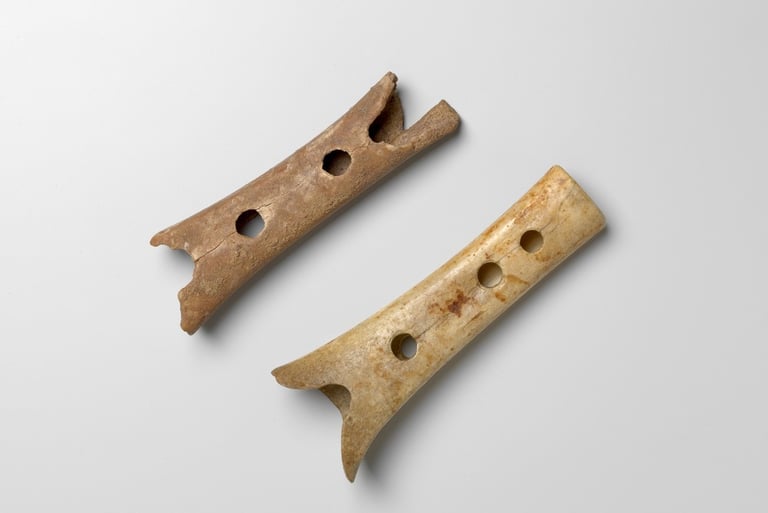
The Neanderthal Flute
60000 - 50000 Years Ago
