
The Neanderthal Eagle Claw Necklace: Europe's Oldest Jewelry?
Discovered at Krapina in Croatia, eight modified white-tailed eagle talons dating to around 130,000 years ago may represent Europe's oldest known jewelry, revealing the symbolic world of Neanderthals.
Aro
7/10/20262 min read
The Neanderthal Eagle Claw Necklace: Europe's Oldest Jewelry?
When we think of jewelry, we often associate it with modern humans. But one remarkable discovery from Croatia suggests that Neanderthals were creating personal ornaments long before our own species spread across Europe.
Around 130,000 years ago, someone carefully collected the talons of white-tailed eagles, modified them, and likely strung them together into what may be Europe's oldest known necklace. If archaeologists are correct, this discovery changes the way we think about Neanderthals forever.
A Discovery at Krapina
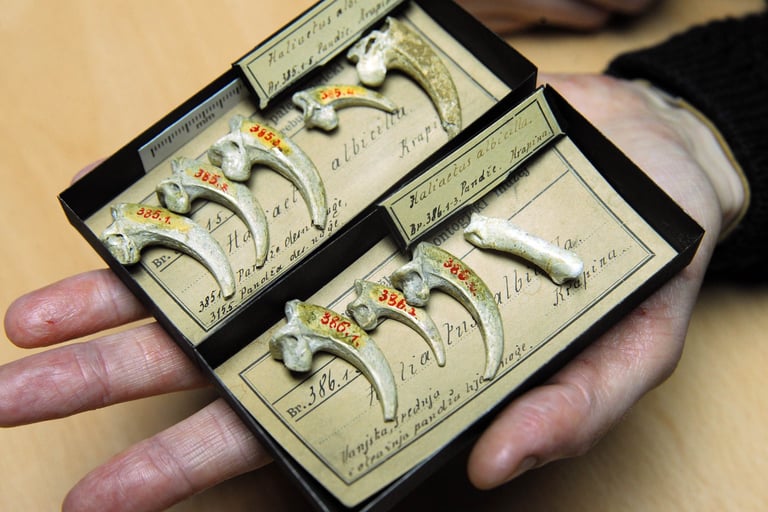
The story begins at Krapina, one of the world's most important Neanderthal sites. Excavations uncovered eight white-tailed eagle talons, all found in the same archaeological context alongside Neanderthal remains.
The claws came from at least three different eagles, making it highly unlikely that they accumulated naturally. Instead, they appear to have been deliberately collected over time.
More Than Eagle Claws
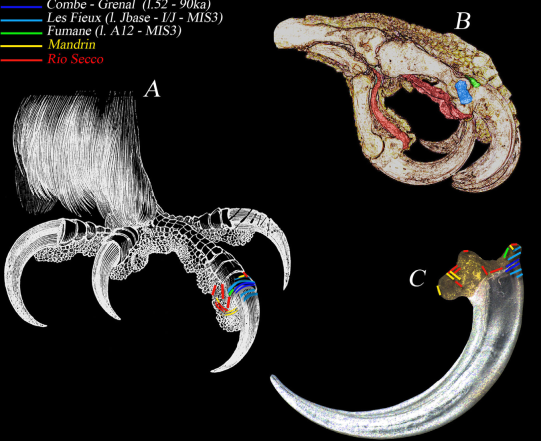
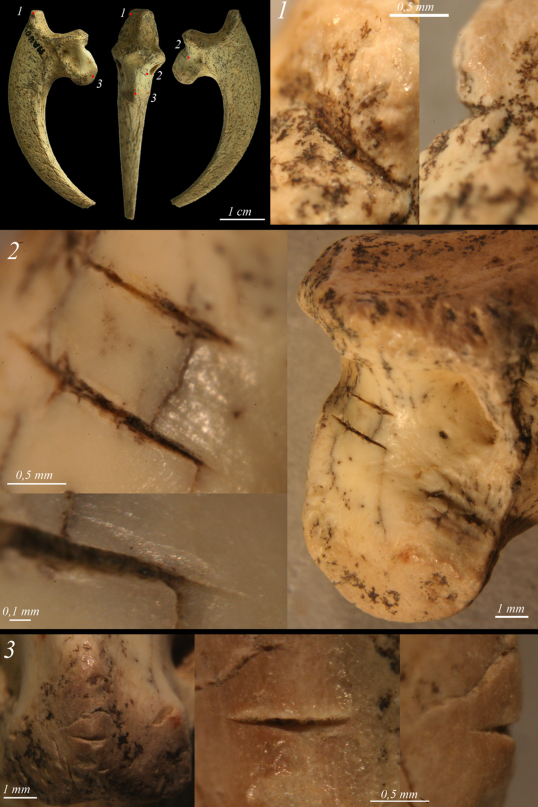
Closer examination revealed something extraordinary. Several talons display polished surfaces, cut marks, and areas of wear that cannot easily be explained by natural processes. The marks are concentrated in places where cords would have rubbed against the claws if they had been suspended together.
Researchers concluded that the talons were probably connected using leather, sinew, or plant fibers to form a necklace or bracelet. Rather than simple animal remains, they appear to have been transformed into personal ornaments.
A Symbol of Identity
Why would Neanderthals collect eagle talons?
White-tailed eagles are among Europe's largest birds of prey, with wingspans exceeding two meters (6.5 feet). Capturing—or even recovering—the claws of such powerful animals would have required effort and intention. Many archaeologists believe the finished ornament may have represented status, identity, or symbolic meaning, rather than serving any practical purpose.
New Clues from Modern Science
Recent microscopic and chemical analyses have revealed even more evidence. Researchers identified traces of red and yellow ochre, black pigment, and tiny remnants of animal fibers preserved on one of the talons. These discoveries suggest the ornament may have been bound together with cord and decorated with pigments, making it even more visually striking.
Although the exact appearance of the necklace can never be reconstructed with certainty, the evidence strongly supports the idea that it was intentionally assembled and worn.
Why It Matters
For much of the twentieth century, Neanderthals were portrayed as simple hunters focused only on survival. Today, that image has largely disappeared.
The Krapina eagle claw necklace joins a growing body of evidence showing that Neanderthals collected unusual objects, used pigments, created ornaments, and may have expressed identity through symbolic behavior.
Whether the necklace represented prestige, ritual, family, or something entirely different, it demonstrates that Neanderthals were capable of abstract thought and cultural expression long before modern humans arrived in Europe.


Neanderthal Eagle Claw Necklace
130000 Years Ago
