
The Quartz Crystal Clovis Point: Ice Age Engineering in Crystal
Crafted from clear quartz crystal over 13,000 years ago, this extraordinary Clovis point showcases the remarkable skill and precision of North America's earliest hunter-gatherers.
FIELD NOTES
Aro
7/23/20262 min read
The Quartz Crystal Clovis Point: Ice Age Engineering in Crystal
Most Clovis spear points were crafted from flint, chert, or obsidian—materials prized for producing razor-sharp edges. But one remarkable discovery breaks that pattern entirely. Instead of ordinary stone, an Ice Age craftsperson chose a piece of clear quartz crystal to create a beautifully fluted Clovis point.
The result is one of the most extraordinary examples of prehistoric craftsmanship ever discovered.
A Weapon Unlike Any Other
Dating to around 13,000 years ago, the Quartz Crystal Clovis Point belongs to the Clovis culture, one of the earliest widespread archaeological traditions in North America. Clovis people are famous for their distinctive spear points, recognized by the long flutes carefully removed from both faces of the blade. These channels helped attach the point securely to a wooden spear shaft. Producing a Clovis point was already a demanding process.
Making one from crystal was something else entirely.
Why Crystal?
Quartz crystal is beautiful—but it is also unpredictable. Unlike flint, it contains natural fractures and internal imperfections that can cause the material to shatter without warning during shaping. Every strike had to be carefully controlled. One mistake could destroy hours of work. The survival of this point demonstrates an extraordinary level of skill and experience.
More Than a Hunting Tool?
The choice of crystal raises an obvious question. Why use such a difficult material when better alternatives were available?
Some archaeologists suggest the point may have served as a prestigious hunting weapon, carried by a highly skilled hunter.
Others believe its unusual appearance gave it symbolic or ceremonial importance. Transparent quartz has attracted human attention throughout history, and it may have held special meaning for Ice Age communities as well.
Mastering Clovis Technology
Like other Clovis points, the artifact displays the characteristic flute extending from its base. Removing this long, thin flake was one of the most challenging steps in the manufacturing process. Even when working with flint, the technique required careful preparation and precise force. Accomplishing the same task in quartz crystal makes the achievement even more remarkable. The point demonstrates not only artistic craftsmanship but also a deep understanding of stone fracture mechanics.
Why It Matters
Ice Age people sometimes selected materials because they were rare, beautiful, or meaningful, even when those materials were much harder to work. More than 13,000 years later, this transparent spear point continues to showcase the extraordinary abilities of North America's earliest master flintknappers.
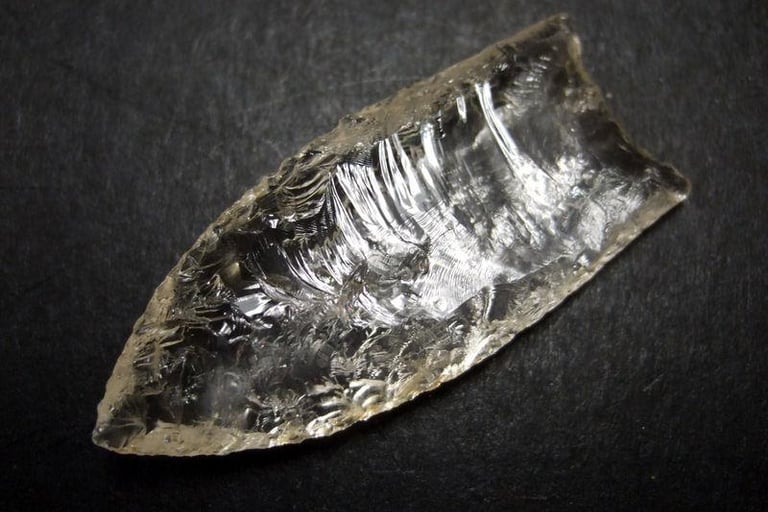
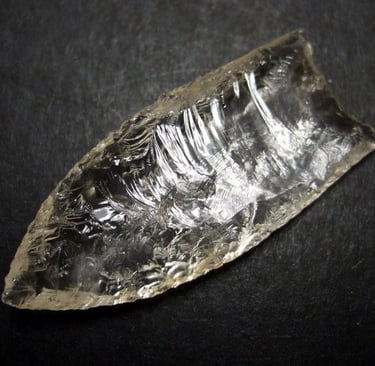
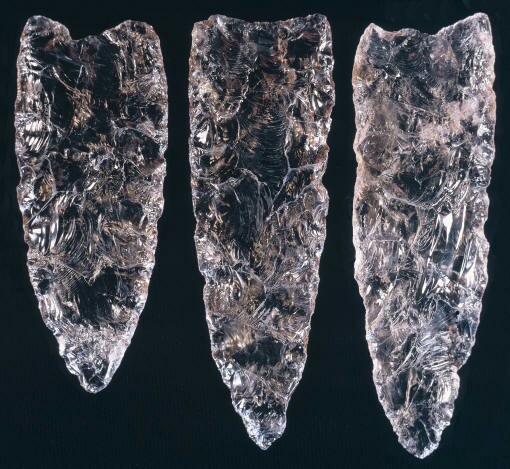
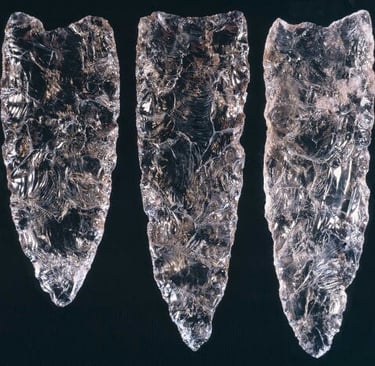


Quartz Clovis Point
13500-12800 Years Ago
